-
Affiliate Marketing Industry in 2026: What Changes We’re Seeing08.6.2026Reading Time: 5 minutes
By 2026, a few changes have become standard in affiliate marketing. Automation has shifted from optional to default, mobile is now the standard screen for almost every campaign, and advertisers, including Nutra brands, price offers around long-term user value rather than the first action.
U.S. affiliate ad spend is projected at $13.81 billion in 2026, up 11.3% from 2025, with the channel driving an estimated $241 billion in U.S. e-commerce sales per eMarketer’s September 2025 forecast. Globally, the industry is approaching the $20B mark per Business Research Insight. Those are healthy numbers, but the competition for clean traffic is healthier still, and that’s what actually changes the daily work.
AI and the Mobile-First Reality
AI and mobile reinforce each other in 2026. AI handles the decisions that used to take most of the day, while mobile is the screen where users actually see them.
The AI work has moved well past writing ad copy. On FatAds, several of those decisions run as built-in tools:
- Time Planner runs your ads only during high-conversion hours, so you don’t pay for dead time.
- CPA Protection stops spend on traffic that misses your target CPA and shifts budget to placements that hit it.
- Optimization Booster drops weak sources automatically and refreshes your whitelist every week.
- Bid Adjustments let you raise bids where a placement converts and lower them where it doesn’t, inside one campaign.
Affiverse reports that 78% of affiliate marketers now use AI tools somewhere in their workflow. But lean too hard on automation and you stop noticing what’s actually happening at the placement level, which is why the best operators still spot-check manually, just weekly rather than hourly.
Mobile is no longer a separate consideration. Post Affiliate Pro’s 2026 industry data puts 62% of affiliate traffic on mobile, with 70% of conversions happening on phone or tablet. If your landing page takes four seconds to load on a mid-range Android in Bogotá, you’re paying for traffic that left before the headline appeared. The mobile baseline now means fast loading, a clear CTA, short forms, and body copy readable without zoom.
People are now used to paying online, whether through Apple Pay, Google Pay, PIX in Brazil, M-Pesa in East Africa, or GCash in the Philippines, without hesitating at the payment screen. For e-commerce in general, prepaid flows that didn’t work in tier-2 geos three years ago now convert because the checkout step is fast and familiar to users, and even Nutra is moving more straight-sale offers into tier-1 markets, where users finish payment without dropping off.
Automation Is Now the Operating System for Scaling
Running a serious push or pop campaign without automated rules now means wasting budget on sources that should have been paused days earlier and on placements that fatigued before anyone caught it.
The shift is mostly about workflow, not features. A solo media buyer can now run more concurrent campaigns than a small team could two years ago, because the routine work has moved off the desk and into the platform:
- Pausing weak sources before they waste budget
- Rebalancing spend across placements based on yesterday’s data
- Tightening frequency caps when click rates drift
Mobidea’s 2026 industry roundup frames that the affiliates winning right now are the ones who can test quickly, manage risk precisely, and scale only proven setups, in that order. Skip the middle step and you’ll waste budget even with the best automation.
Targeting is the other side of this. Push and pop traffic in 2026 doesn’t get blasted at huge audiences but routed by behavioral signals, and for Nutra, this matters concretely: a weight-loss angle that converts in Brazil can underperform in Mexico unless the system swaps creatives based on early engagement data.
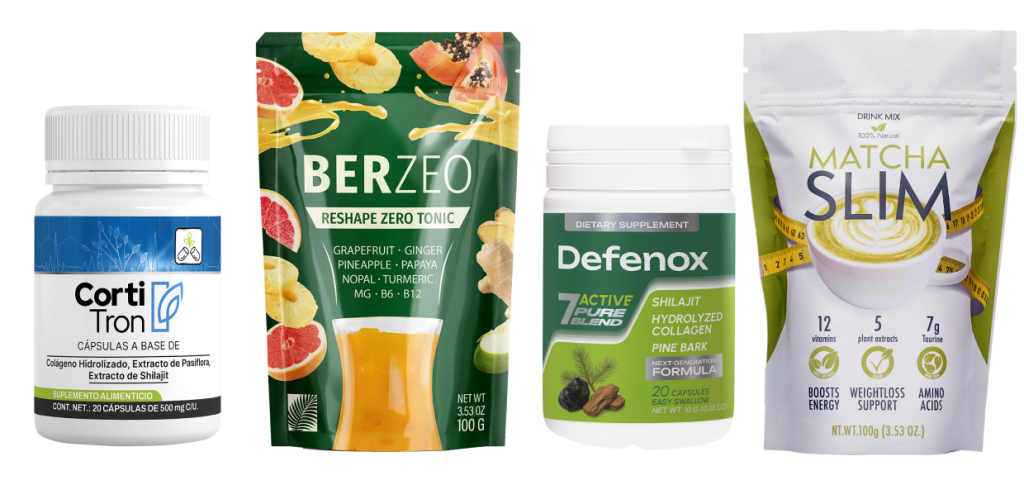
AdCombo WeightLoss Offers
There’s a trade-off, though. The more you outsource decisions, the harder it is to spot what went wrong when something breaks: volume drops one morning, CTR collapses on a placement that worked fine yesterday. That’s why FatAds keeps source-level stats and creative performance visible to media buyers, so you can trace the cause yourself and adjust the rules by hand.
Creatives Have Become the Real Targeting Lever
If automation runs the placements, creatives now decide the campaign. So, the cleanest framing for 2026 is not buying audiences anymore, but buying angles. The system finds the audience for whichever angle performs.
This shifts the daily job where AI tools let a single buyer produce the creative volume that used to take a team a month, and VSL pages and short vertical video dominate Nutra right now, with most of the scale still coming from Facebook and TikTok despite yearly predictions that one or the other is fading.
Localization is where most affiliates still leave money on the table. According to IREV’s 2026 emerging-markets playbook, translating creatives into local languages like Swahili, Arabic, Spanish, or Portuguese often doubles click-through rates, which is the biggest improvement most affiliates can get at the top of the funnel. In MENA, localization also covers visual cues: modest dress, halal-friendly product positioning, and culturally aware angle selection. Skipping that layer makes conversion rates drop sharply in the first days of testing.
But more creative output means more compliance work, especially in Nutra, where the same AI that produces a winning angle can produce a claim that gets your account suspended, making speed without a compliance pass an expensive way to lose accounts.
Where Nutra Traffic Actually Goes in 2026
In Nutra and most CPA verticals, the geo picture is split. Many networks work emerging markets like LATAM, MENA, Southeast Asia, and parts of Africa, where CPMs are lower and audiences are still fresh. Others put more budget into Tier-1 again, especially the US, where mobile payment habits have made straight-sale Nutra workable in ways it wasn’t two or three years ago.
The LATAM region’s e-commerce market is projected to grow around 19.4% annually through 2026, with health and wellness alone expanding roughly 7.8% per year (AffMaven, 2026). Mobile adoption sits above 70% across the major geos.
For Africa region, INB.bio flags Tanzania and Nigeria as markets where smaller budgets still get traction, with less affiliate competition than Tunisia or Morocco.
However, advertisers in 2026 don’t just pay for the first conversion. They watch LTV, approval rates, and repeat purchases, so leads that look fine on the surface but never turn into actual sales get repriced fast, and programs that used to accept marginal sources now reject them in week one.
What Actually Wins in 2026
Taken together, mobile-first funnels, smart geo diversification, AI-assisted creatives, and automated budget control work best as one approach rather than separate skills.
Push and pop traffic still earn their place in Nutra, since push delivers warm opted-in users, in-page push extends reach, and pop and direct click bring the volume. FatAds covers all four formats in one dashboard, with the automation rules described above and full source-level reporting.
Pair AdCombo’s Nutra offers with FatAds traffic, set the trends instead of chasing them, and earn from what actually works.



Leave your comment