-
 Types of Facebook Accounts for Affiliate Marketing Compared: Self-Registered, Farmed or Agency04.6.2026Reading Time: 6 minutes
If you want to run traffic from Facebook, the first real question isn’t which offer to test or which creative to launch. It’s what type of account you’re going to use. Because without a stable account, nothing else matters.
Here’s the contradiction most affiliates only understand after losing money: a Facebook account is a consumable. Eventually, it will get banned. The only difference is whether that happens in a few hours or after several months. At the same time, your account is the foundation of your entire setup.
The account type you choose affects:
- How much do you spend on testing?
- How quickly you get banned?
- How easily you can scale?
- How much budget do you lose along the way?
Beginners often think, “I’ll just create an account myself—it’s free.” That sounds logical until repeated bans wipe out your testing budget befфore the first profitable campaign appears.
Why Facebook Bans Accounts
Before choosing an account type, it’s important to understand what Facebook is actually analyzing. This platform is actually a large system with multiple layers of fraud detection that starts evaluating your activity from the very first login. So even the smallest slip will trigger a ban at some point.
Facebook primarily looks at the following:
- User behavior: does the activity look natural, and is there engagement history?
- Device and IP: has this device fingerprint appeared before, and does the location match?
- Payment data: is the payment method trusted or entirely new?
- Activity history: how old is the account, and has it run ads before?
- Trust score: an internal confidence rating built from all the signals above
A brand-new account starts with zero trust. It lacks history and established behavior, so Facebook can’t make any positive judgments. That’s why fresh accounts are always under pressure from the start.
One of the biggest beginner mistakes is trying to brute-force scaling by creating hundreds of accounts. It may work temporarily. However, Facebook eventually starts detecting patterns, banning entire batches, flagging cards and shutting down infrastructure. At that point, the numbers stop making sense.
Facebook Account Types for Affiliate Marketing
Let’s take a look at the accounts most commonly used by media buyers in marketing.
Auto-Reg Accounts
These accounts are created automatically using scripts and bots, with no human involvement. They’re usually produced in bulk and sold cheaply, which makes them attractive for affiliates focused on aggressive testing and short-term campaigns.
Nevertheless, auto-regs have a big issue, and it’s stability. Facebook can often detect automated creation patterns nearly immediately. That works especially if the accounts share similar fingerprints, IP ranges, and behavioral signals. Even with strong infrastructure, many accounts never make it past the first review stage.
Pros of auto-reg accounts:
Very cheap;
Easy to buy in large volumes;
Useful for fast mass testing.Cons of auto-reg accounts:
Extremely low trust score;
Often survive only a few hours to several days;
Require solid infrastructure: antidetect browsers, proxies, warmup;
Many get banned before ads even launch.Self-Reg Accounts
These are manually created accounts registered by a real person using a real device and phone number. Because there’s no automation involved during creation, Facebook generally treats them as more trustworthy compared to auto-reg accounts.
However, self-regs still require proper handling. Launching ads too aggressively or skipping the warmup phase can quickly trigger restrictions. Most affiliates using self-regs spend time building realistic activity first before attempting to scale campaigns.
Pros of self-reg accounts:
Better trust level than auto-regs;
Full control over the registration process;
Easier to warm up naturally.Cons of self-reg accounts:
Time-consuming to create and maintain;
Without proper warmup, many die within two weeks;
Still require antidetect tools and proper setup.Farmed Accounts
Farmed accounts are aged accounts with activity history. They’re created and then gradually “warmed up” through simulated organic behavior: scrolling feeds, liking posts, joining groups, and sometimes running small campaigns.
The goal is to build trust over time. Compared to fresh accounts, farmed accounts already look established in Facebook’s system, which usually results in fewer instant bans and better campaign stability.
At the same time, quality varies heavily across sellers. Some accounts are genuinely maintained for weeks or months, while others receive only minimal activity before being resold as “farmed.” That’s why experienced buyers pay close attention to account history and behavioral quality.
Pros of farmed accounts:
Higher trust score;
Longer lifespan;
Better tolerance for grey-area offers;
Less likely to trigger reviews during campaign launches.Cons of farmed accounts:
More expensive;
Proper farming takes weeks;
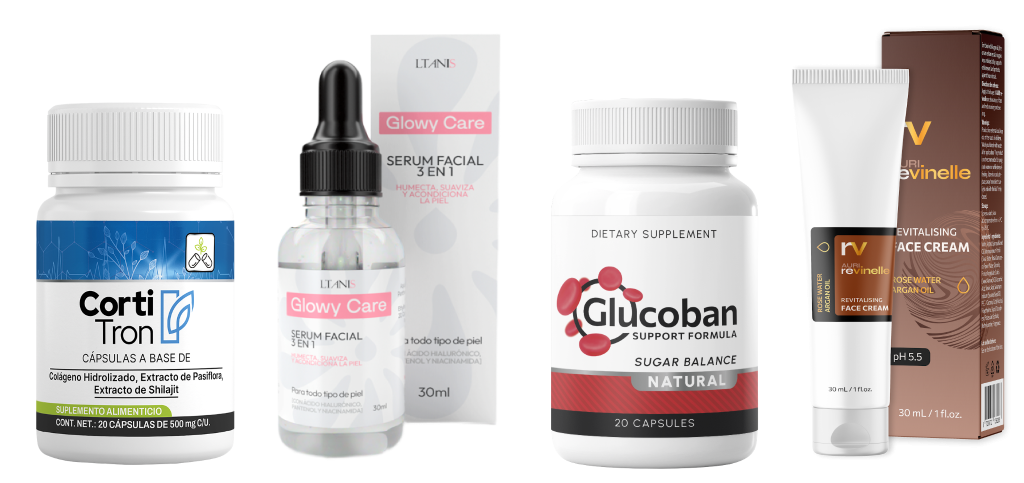
The market is flooded with fake “farmed” accounts.Whether you’re running self-registered accounts or farms, AdCombo provides high-converting affiliate Nutra offers giving affiliates the flexibility to match profitable campaigns with the traffic sources and account types that fit their strategy.
Agency Accounts
Agency accounts are a separate category entirely. These accounts come through official Facebook agency partnerships and typically have increased trust from the start. Unlike standard accounts, agency accounts are designed for advertisers spending serious budgets.
They often come with higher daily limits, better account support, and more flexibility during campaign moderation. But that doesn’t mean they’re invincible. Poor-quality creatives, policy violations, and weak infrastructure can still trigger restrictions.
However, compared to regular accounts, agency accounts usually provide a much more stable environment for scaling.
Pros of agency accounts:
Highest trust level;
Larger spending limits;
Better approval rates for sensitive offers;
Faster issue resolution.Cons of agency accounts:
Expensive;
Not designed for beginners;
Require experience and stable infrastructure to justify the cost.However, there’s one more option that combines all the benefits – account rental with RentAcc.
What Is RentAcc?
RentAcc gives affiliate marketers and media buyers access to Facebook advertising accounts that are ready to run. No warmup or manual replacement cycles. Users get agency accounts with proxies and antidetect configurations already in place, so the first day of work is spent running traffic, not building infrastructure.
The platform runs on a CRM where users track accounts, check balances, get Telegram alerts and request additional setups when they need to expand.
The idea is simple: less time managing accounts, more time on campaigns.
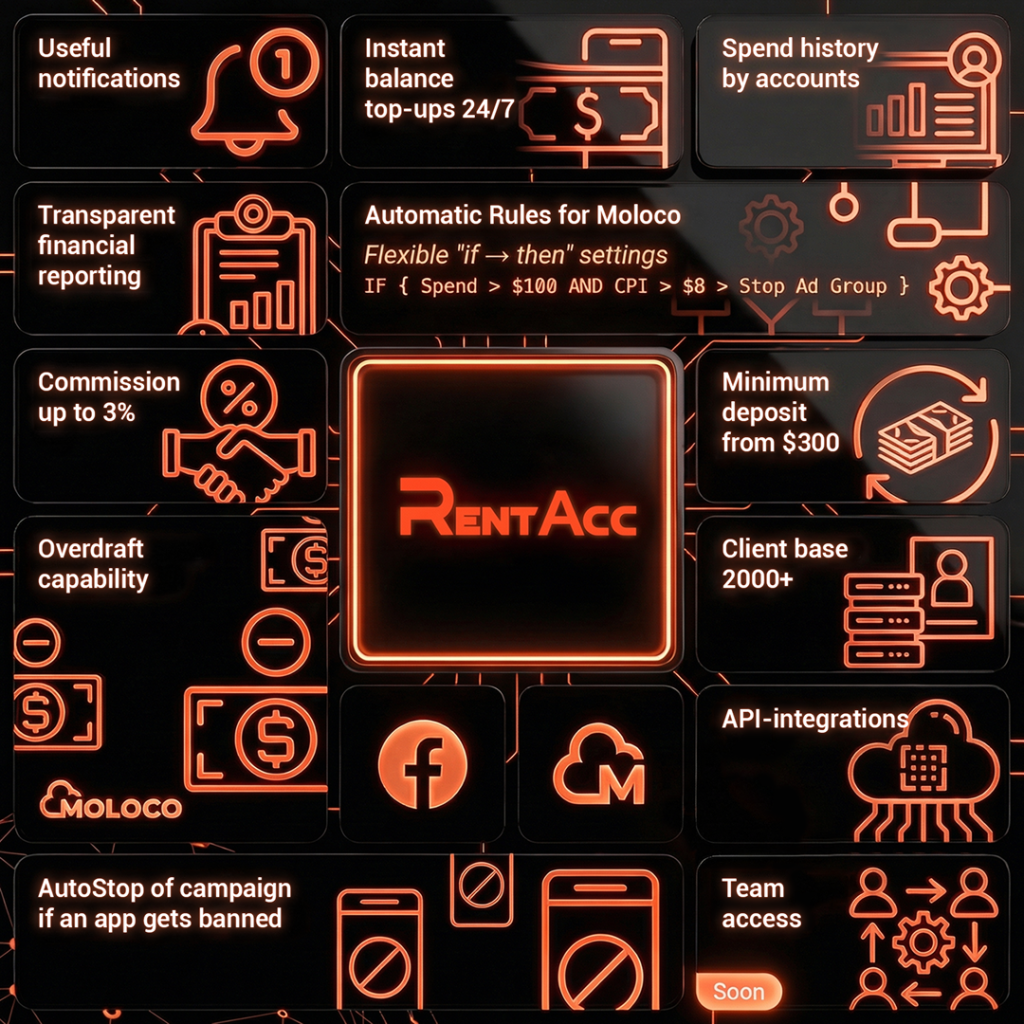
Agency accounts from RentAcc carry higher trust than self-regs, hold up better under volume, and are less likely to trigger reviews at launch. On the operational side you get:
- No farming or manual replacements after bans;
- Proxies and antidetect configs included;
- Fast account swap if something fails mid-campaign;
- Spend capped to your deposited balance — no overages.
RentAcc operates on a transparent commission model of 4 to 10% and is built for both solo media buyers and teams who prioritize stability, clarity, and a structured workflow. If something goes wrong, a refund mechanism is in place to reduce operational risk.
➡️ For more detailed terms, contact the RentAcc manager in Telegram chat.
What to Choose as a Beginner in Affiliate Marketing
If you’re just starting your journey in affiliate marketing, then here’s a brief comparison of the available account types and their peculiarities. Note that these are estimates based on how most media buyers work with their accounts. A lot depends on which creatives you launch and how you work.
Type Price Trust Lifespan Best For Auto-reg Low Low 1–4 days Fast mass testing Self-reg Medium Medium Up to 2 weeks Beginners learning setup Farmed High High Long-term Main working accounts Agency Very high Maximum Long-term Teams and scaling If you’re new to Facebook ads, start with self-regs. Get familiar with the setup, learn what breaks and why, then move to agency accounts once you have a working process.
And if you’re already running campaigns at volume, RentAcc cuts the infrastructure work — agency accounts, proxies, and antidetect configs ready without the setup time. The RentAcc platform has been operating on the market for over three years, focusing on stable infrastructure to reduce uncertainty and give media buyers a working environment where they can focus on performance instead of account survival.
Summary
An account isn’t just a login. It’s the base layer everything else runs on. Pick the wrong type at the start, and you’re looking at a wasted budget, broken funnels, and a lot of time spent on problems you didn’t need to have.
Learn to work with consumables and infrastructure. That’s the skill separating people who run stable, profitable campaigns from people who are always “in testing mode.” If you need a clean entry point without building everything from scratch, RentAcc gives verified accounts ready to run immediately.
And once your infrastructure is in place, the next step is putting it to work with offers that can actually scale. That’s where AdCombo comes in — giving affiliates access to proven 2400+ in-house Nutra and the support needed to turn a stable setup into consistent revenue.


Leave your comment